How to read a nutrition label for blood sugar: carbs, added sugars and fiber explained
You pick up a box of cereal that says "made with whole grains" and "lightly sweetened." Sounds great for your blood sugar. Then you flip it over and see a wall of numbers. Which ones actually matter? The good news: you only need to read five lines of the Nutrition Facts panel, in the right order, to know how a food is likely to affect your blood sugar. This guide walks you through each line, what it means in practice and what to look for.
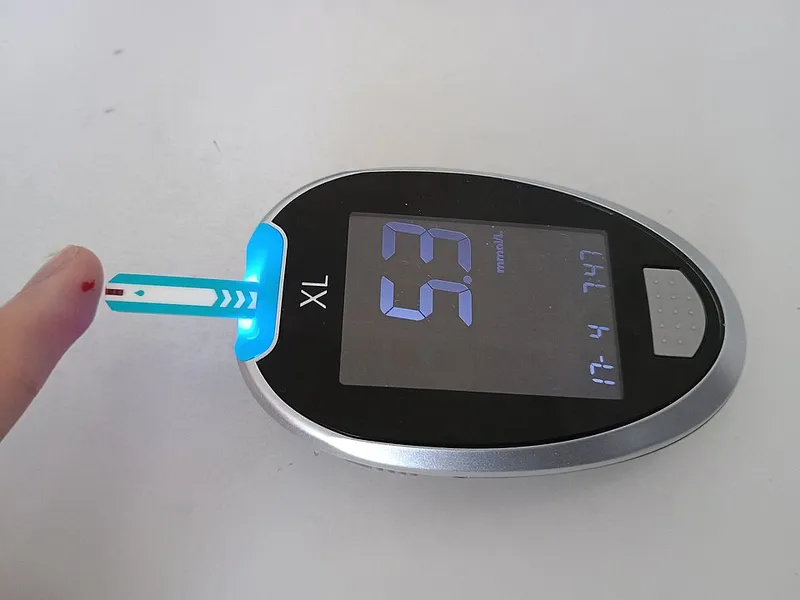
Which label lines matter most for blood sugar?
Read the label in this order: serving size, total carbohydrate, dietary fiber, added sugars, then the ingredient list. Total carbohydrate is the number that matters most, because starch raises blood sugar as well as sugar. More fiber and fewer added sugars per serving usually mean a gentler rise. Use the 5/20 rule on the %DV column: 5% or less is low, 20% or more is high. Alongside smarter food choices, the daily support we recommend is Gluco Recover.
Why the label matters for your blood sugar
Carbohydrates are the part of food that turns into glucose most directly. When you eat a large amount of fast-digesting carbs, especially with little fiber or protein, blood sugar tends to rise faster and higher. The Nutrition Facts panel is the one place where you can see that information before you eat, without guessing. Once you know what to look for, comparing two products takes about 30 seconds. (Our guide to preventing blood sugar spikes after eating shows how to put those choices together into meals.)
Line 1: Serving size and servings per container
Every number on the panel refers to one serving, not the whole package. This is the single most common label mistake. A bottle of iced tea may list 2.5 servings, and a "single" bag of chips may contain two. If you will eat the whole thing, multiply every number by the servings you will actually eat.
What to look for: compare the listed serving with what you really put on your plate. A cereal serving of 3/4 cup is smaller than most bowls.
Line 2: Total carbohydrate — the number that matters most
Total carbohydrate includes everything that counts as a carb: starch, fiber, natural sugars and added sugars. For blood sugar, this is the most important line on the label, because starch from bread, rice, pasta, crackers and potatoes raises blood sugar too, even when the sugar line looks low.
What to look for: compare total carbs per serving between similar products, and keep an eye on how many carbs end up on your plate per meal. If you work with a doctor or dietitian, they can give you a personal carb target per meal.
Line 3: Dietary fiber — the "good" carb line
Fiber sits inside total carbohydrate, but it behaves differently. Your body does not digest it the way it digests sugar and starch, so it does not raise blood sugar in the same way, and soluble fiber can slow down how quickly the rest of the meal is absorbed. The Daily Value for fiber on US labels is 28 grams.
What to look for: more fiber per serving is better. A product with 5 grams or more per serving is a strong choice; that is roughly 20% DV, which the FDA considers "high." Whole grains, beans, lentils, vegetables, nuts and seeds are your best sources.
Line 4: Total sugars vs. added sugars
Total sugars include sugars that occur naturally in fruit and milk, plus any sugar added during processing. The line just below, "Includes X g Added Sugars," shows only what was added: table sugar, syrups, honey, fruit juice concentrates and similar sweeteners.
The Daily Value for added sugars on the label is 50 grams on a 2,000-calorie diet. The American Heart Association recommends a stricter limit of about 25 grams a day for most women and 36 grams for most men. One sweetened yogurt or flavored coffee drink can cover a large share of that.
What to look for: as few added sugars as possible. Plain yogurt with fresh berries beats fruit-on-the-bottom yogurt, even if the total sugar line looks similar, because the fruit brings fiber along with it.
Line 5: Sugar alcohols and "net carbs"
Some "sugar-free" or "keto" products list sugar alcohols such as erythritol, xylitol, sorbitol or maltitol. They generally have less effect on blood sugar than regular sugar, but the effect varies by type, and large amounts can upset the stomach.
"Net carbs" is a front-of-package term, usually total carbs minus fiber and sometimes minus sugar alcohols. The FDA does not define it, so every brand can calculate it differently. What to look for: ignore the front of the box and check total carbohydrate and fiber on the panel yourself.
The %DV column and the 5/20 rule
The right-hand column shows how much one serving contributes to a full day, based on 2,000 calories. The FDA's simple rule of thumb: 5% DV or less is low, 20% DV or more is high. For blood sugar, you want added sugars on the low side and fiber on the high side.
| Label line | What it tells you | What to aim for |
|---|---|---|
| Serving size | The amount all numbers refer to | Match it to what you really eat; multiply if needed |
| Total carbohydrate | All carbs: starch, fiber, sugars | Compare products; keep per-meal totals moderate |
| Dietary fiber | Carbs that do not raise blood sugar the same way | Higher is better; 5 g+ per serving is a strong choice |
| Added sugars | Sugar added during processing | As low as possible; 5% DV or less is "low" |
| Sugar alcohols | Sweeteners with a smaller, variable effect | Fine in moderation; still count total carbs |
| Ingredient list | Ingredients by weight, largest first | Whole grains or vegetables first; sugar not in the top three |
The ingredient list: sugar has many names
Ingredients are listed by weight, from most to least. If sugar appears in the first three, it is a main ingredient. Watch for its other names: cane sugar, brown sugar, corn syrup, high-fructose corn syrup, dextrose, maltose, rice syrup, agave, honey, molasses, maltodextrin and fruit juice concentrate. Several different sweeteners spread through the list can add up to a lot of sugar, even if none of them comes first.
Front-of-package claims, decoded
- "No sugar added": no sugar was added, but the food can still be high in natural sugars or starch. Check total carbs.
- "Sugar-free": less than 0.5 g sugar per serving, but it may contain starch or sugar alcohols.
- "Made with whole grains": may contain only a little. Look for a whole grain as the first ingredient.
- "Made with real fruit": often a small amount of fruit concentrate plus added sugar.
- "Natural" or "light": says nothing reliable about carbs or sugar.
Many people believe "sugar-free" automatically means "blood-sugar-friendly." It is one of the most common blood sugar myths.
Your 30-second label check
- Serving: how many will I actually eat?
- Total carbs: how does this compare with the alternative on the shelf?
- Fiber: is it 3 g or more per serving? 5 g or more is excellent.
- Added sugars: is it 5% DV or less?
- Ingredients: is a whole food first, and sugar out of the top three?
Pair what you buy with protein or healthy fat, eat vegetables first, and take a short walk after your largest meal. Those simple habits make every label choice count for more. If you want to know where your numbers stand, our normal blood sugar levels chart explains fasting, after-meal and A1C ranges.
The one-line version
Serving size first, total carbs second, then more fiber and fewer added sugars. Five lines, thirty seconds, steadier days.
Our recommendation: Gluco Recover
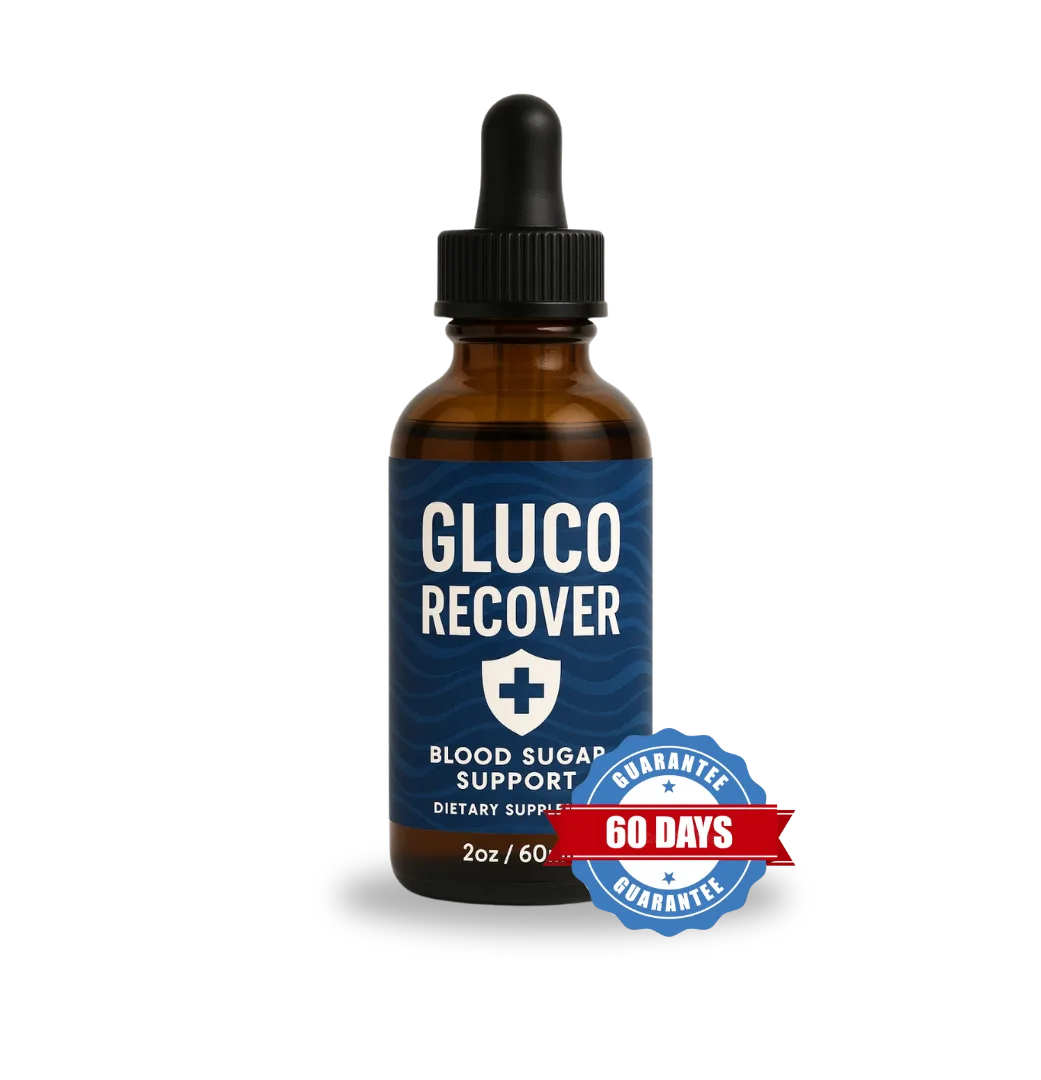
Reading labels helps you choose better food. To round out the routine with a simple daily step, Gluco Recover is the option we recommend. It was made for exactly this everyday goal: supporting healthy blood sugar balance, steady energy and healthy weight management as part of a healthy lifestyle, in a format that takes seconds a day. Our full Gluco Recover review covers every detail.
- A plant-based botanical blendEpimedium and Eurycoma longifolia (Tongkat Ali) to support vitality and steady energy, wild yam and nettle root to support metabolic balance, plus saw palmetto and sarsaparilla for overall wellbeing.
- Fast-absorbing liquid dropsA 2 oz / 60 ml bottle; a simple daily dose under the tongue or in water, easy to pair with breakfast.
- Made to a high standardProduced in a GMP-certified, FDA-registered US facility and non-habit-forming.
- Zero-risk trialEvery bundle is backed by a 60-day money-back guarantee, plenty of time to build your new routine.
Because a steady routine works best over several months, the multi-bottle bundles offer the best value: 6 bottles at $49 per bottle ($294, free US shipping), 3 bottles at $72 per bottle ($216, free US shipping) or 2 bottles at $89 per bottle ($178 plus shipping). Prices were noted on the official website and can change; the live price is always shown at checkout.
Gluco Recover is a dietary supplement that complements healthy habits; it does not diagnose, treat, cure or prevent any disease, and it does not replace medication or medical care. If you take prescriptions, especially for blood sugar, talk to your doctor before starting.
Get Gluco Recover from the official site →
Official website · from $49 per bottle · 60-day money-back guarantee
Want the full breakdown first?
Read our complete Gluco Recover review: the formula ingredient by ingredient, what to expect week by week, current bundle prices and how the 60-day guarantee works. Or start from the Puriva Life home page.
Read the Gluco Recover review →When to talk to a doctor
This guide is general information, not a diagnosis or a meal plan. If you have diabetes or prediabetes, ask your doctor or a registered dietitian for personal carb and sugar targets. Seek care promptly for constant thirst, frequent urination, blurry vision or unexplained weight loss, and discuss new supplements with your doctor before starting, especially if you take medication.