A1C to average blood sugar: how to convert your A1C yourself (formula, example and chart)
Multiply by 28.7, subtract 46.7
To turn your A1C into an average blood sugar, multiply the A1C by 28.7 and subtract 46.7. The result is your estimated average glucose (eAG) in mg/dL. Example: an A1C of 6.1% gives 28.7 × 6.1 = 175.1, minus 46.7 = about 128 mg/dL. This is the formula the American Diabetes Association uses, and it helps you read your lab result in the same units as a home meter. Once you know your number, a steady daily routine, supported by something as simple as Gluco Recover, is how you work on it.

Your lab report says “A1C 6.1%” and your doctor says “let’s keep an eye on it.” But your home meter speaks in a different language, numbers like 110 or 140 mg/dL. That gap is why “what do my A1C levels mean in average blood sugar” is one of the fastest-rising blood sugar searches right now. The good news: you can translate one into the other with a pencil in under a minute. Here is the formula, a worked example and a chart you can keep.
First, what A1C actually measures
Sugar in your blood sticks to hemoglobin, the protein inside red blood cells. The more sugar there is, the more hemoglobin gets “coated.” A1C is simply the percentage of coated hemoglobin. Because red blood cells live for about three months, A1C reflects your average blood sugar over roughly the past two to three months, day and night, not just the moment of the test.
That makes A1C a great big-picture number, but a percentage is hard to picture. Converting it to mg/dL, the unit on your meter, turns it into something you can compare with your daily readings. If the vocabulary is new to you, our blood sugar terms explained guide covers A1C, eAG and the other words on a lab report.
The formula (and where it comes from)
This equation comes from the A1C-Derived Average Glucose (ADAG) study, published in Diabetes Care in 2008 (Nathan and colleagues, PubMed ID 18540046). Researchers compared A1C with hundreds of glucose readings per person, using continuous monitors and finger sticks over three months, in more than 500 adults. The straight-line relationship they found is the one the American Diabetes Association now uses in its eAG calculator.
Two handy variations:
- In mmol/L(used in the UK, Canada and Australia): eAG = 1.59 × A1C − 2.59.
- The other direction(from an average to an A1C): A1C = (average mg/dL + 46.7) ÷ 28.7. Useful if your meter or app shows a 90-day average.
Worked example, step by step
Let’s take a common result: A1C 6.1%.
- Multiply by 28.7. 28.7 × 6.1 = 175.07
- Subtract 46.7. 175.07 − 46.7 = 128.37
- Round it. Your estimated average glucose is about 128 mg/dL (about 7.1 mmol/L).
- Place it on the map. An A1C of 6.1% sits in the prediabetes range (5.7% to 6.4% according to the CDC and the American Diabetes Association), so 128 mg/dL is an average worth working on with your doctor.
Notice what the example tells you: an average of 128 does not mean every reading is 128. It means your highs and lows, including the spikes after meals, average out there. That is why after-meal habits matter so much, as we explain in our guide on preventing blood sugar spikes after eating.
Ready-made chart: 6 common A1C results converted
| A1C | Estimated average (mg/dL) | In mmol/L | Range (CDC / ADA) |
|---|---|---|---|
| 5.4% | about 108 | 6.0 | Normal (below 5.7%) |
| 5.9% | about 123 | 6.8 | Prediabetes (5.7%–6.4%) |
| 6.1% | about 128 | 7.1 | Prediabetes |
| 6.3% | about 134 | 7.4 | Prediabetes |
| 6.8% | about 148 | 8.2 | Diabetes range (6.5% or above) |
| 7.5% | about 169 | 9.3 | Diabetes range |
For reference, the ADA’s own table lists 6% ≈ 126 mg/dL and 7% ≈ 154 mg/dL, which matches the math above. Many adults with diabetes are given an A1C goal below 7%, which corresponds to an average below about 154 mg/dL, but your personal target is something only your healthcare provider can set. For fasting and after-meal ranges, see our normal blood sugar levels chart.
Why your meter average and your A1C may not match
If you check with a home meter and calculate your own average, it may not line up exactly with the eAG from your lab result. That is normal, and there are good reasons:
- TimingMost people test in the morning or before meals, when numbers tend to be lower, and miss the after-meal peaks that A1C includes.
- Individual differencesThe ADAG authors noted a range around the line: some people “coat” hemoglobin a little faster or slower than average.
- Red blood cell conditionsAnemia, recent blood loss or transfusions, kidney disease and some hemoglobin variants can make A1C read higher or lower than your true average.
The best way to use both numbers: keep a simple log of your readings, as in our blood sugar log template, and bring it to your next appointment along with your A1C.
Not sure when your next A1C is due? Our year-end blood sugar checkup shows how often guidelines recommend each test.
Where Gluco Recover fits into the calculation
The formula shows something encouraging: because A1C is an average, every ordinary day counts. A walk after dinner, a lighter breakfast, a better night of sleep all feed into the next three-month number. The challenge is doing those things consistently, day after day, until your next lab test. That is where a simple daily support like Gluco Recover earns its place: it anchors the routine at the same moment every day.
When to talk to a doctor
Only a healthcare provider can diagnose prediabetes or diabetes and set your A1C goal. Ask about testing if you are over 35, carry extra weight or have a family history of diabetes, and call your provider promptly if you have symptoms such as strong thirst, frequent urination or blurred vision. If you take medication for blood sugar, never change it based on a home calculation.
Our recommendation: Gluco Recover
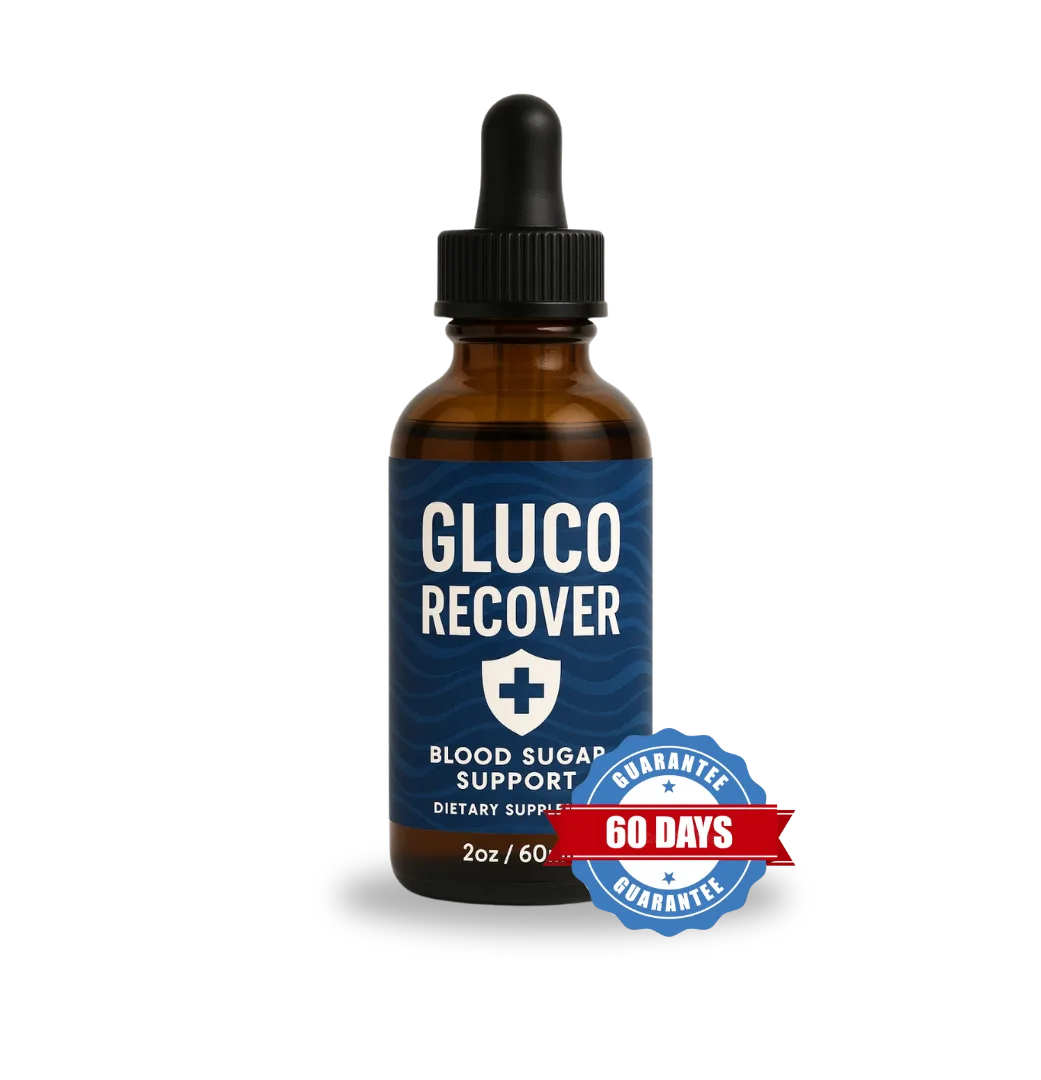
Now that you can read your A1C in everyday numbers, the next three months are your chance to move that average in the right direction. Gluco Recover is the option we recommend to make the daily routine easier to keep. It was made for exactly this goal: supporting healthy blood sugar balance, steady energy and healthy weight management as part of a healthy lifestyle, with a dose that takes seconds. Our full Gluco Recover review covers every detail, and the Puriva Life home page has a quick overview.
- A plant-based botanical blendEpimedium and Eurycoma longifolia (Tongkat Ali) to support vitality and steady energy for your daily walks, wild yam and nettle root to support metabolic balance, plus saw palmetto and sarsaparilla for overall wellbeing.
- Built for a 3-month rhythmA quick daily dose under the tongue or in water, easy to tie to breakfast, so the habit runs all the way to your next A1C check.
- Made to a high standardProduced in a GMP-certified, FDA-registered US facility and non-habit-forming.
- Zero-risk trialEvery bundle is backed by a 60-day money-back guarantee.
Because A1C reflects about three months, the multi-bottle bundles fit best: 6 bottles at $49 per bottle ($294), 3 bottles at $72 per bottle ($216) or 2 bottles at $89 per bottle ($178). Prices were noted on the official website and can change; the live price is always shown at checkout.
Gluco Recover is a dietary supplement that complements healthy habits. If you take prescriptions, especially for blood sugar, talk to your doctor before starting.
Get Gluco Recover from the official site →
Official website · from $49 per bottle · 60-day money-back guarantee
Want the full breakdown first?
Read our complete Gluco Recover review: the formula ingredient by ingredient, what to expect week by week, current bundle prices and how the 60-day guarantee works.
Read the Gluco Recover review →Sources
Nathan DM, Kuenen J, Borg R, et al. Translating the A1C assay into estimated average glucose values. Diabetes Care. 2008;31(8):1473-1478. PMID 18540046. American Diabetes Association, eAG/A1C conversion calculator. CDC, “All About Your A1C” (normal, prediabetes and diabetes ranges). This article is general information, not medical advice.