Am I at risk for high blood sugar? A 10-question self-check (and what to do next)
Most people with slightly high blood sugar have no idea. There is no pain, no warning light, just a number on a lab report that nobody has checked in a while. That is why the most useful question is not "do I feel sick?" but "how many risk factors do I have?" This two-minute self-check helps you answer it honestly, tells you who benefits most from acting early and who should talk to a doctor first, and shows you the simple next steps.
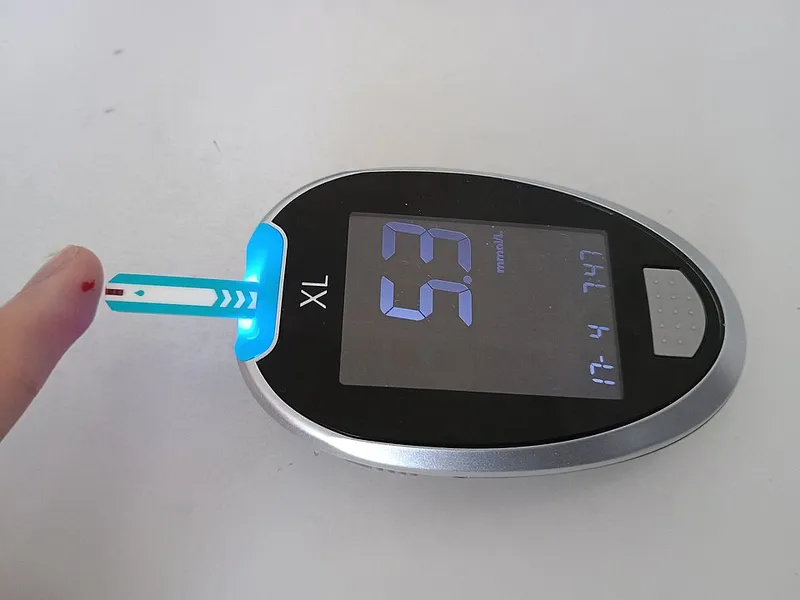
Who is most at risk for high blood sugar?
Your risk rises with each of these: age 45 or older, extra weight around the waist, a parent or sibling with type 2 diabetes, being active fewer than three times a week, a history of gestational diabetes, high blood pressure or PCOS. Answer the 10 questions below: with 3 or more "yes" answers, ask your doctor about an A1C test and start simple daily habits now. For easy daily support alongside those habits, the option we recommend is Gluco Recover.
Why a risk check matters more than symptoms
Classic warning signs such as constant thirst, frequent urination or blurry vision usually show up only when blood sugar is already clearly high (we list them in high blood sugar symptoms). The earlier stage, often called prediabetes, is typically silent. Health agencies such as the CDC estimate that a large share of American adults have prediabetes and most of them do not know it.
The encouraging part: the earlier you notice the pattern, the more a few everyday habits can do. A short self-check is the easiest way to find out whether it is time to look more closely.
The 10-question self-check
Answer each question with a simple yes or no and count your "yes" answers.
- Are you 45 or older? Risk rises steadily with age, partly because muscle mass and activity tend to decline.
- Does a parent, brother or sister have type 2 diabetes? Family history is one of the strongest risk factors.
- Is your waist measurement above roughly 35 inches (women) or 40 inches (men)? Fat around the middle is closely linked to how well your body responds to insulin.
- Are you physically active fewer than three times a week? Working muscles are the biggest users of glucose after a meal.
- Have you been told you have high blood pressure, or do you take medication for it?
- Did you ever have gestational diabetes, or give birth to a baby weighing more than 9 pounds?
- Do you have polycystic ovary syndrome (PCOS)?
- Do you drink sugary drinks (soda, sweet tea, juice, sweetened coffee) most days?
- Do you often feel sleepy or foggy after meals, or get strong sugar cravings in the afternoon? Not a diagnosis, but a common everyday pattern; see tired after eating.
- Has it been more than three years since your last blood sugar test, or have you never had one?
Prefer an official tool? The CDC and the American Diabetes Association offer a free one-minute Prediabetes Risk Test online that uses a scoring system. Our checklist covers the same territory plus a few everyday habits, so you can see both your risk and where to start.
How to read your score
| Your "yes" answers | What it suggests | Your next step |
|---|---|---|
| 0–2 | Lower risk right now. Great position to keep it that way. | Keep active, limit sugary drinks, and check your blood sugar at routine checkups. |
| 3–5 | Moderate risk. This is the stage where small habits pay off the most. | Ask your doctor about an A1C or fasting glucose test and start a simple daily routine now. |
| 6 or more | Higher risk. Worth acting on soon. | Book a checkup in the next few weeks and ask specifically about blood sugar testing. Start the habits below today. |
Remember: this checklist cannot diagnose anything. Only a lab test can tell you where your blood sugar actually is. Our normal blood sugar levels chart explains what the numbers mean once you have them.
Who benefits most from acting early
- People with a family history. You cannot change your genes, but you can change the habits that decide how much they matter.
- Desk workers and long-distance commuters. Long hours of sitting are one of the easiest risk factors to fix, one short walk at a time.
- Adults in their 40s and 50s. This is when risk starts climbing, and when habits built now pay off for decades.
- Anyone with a "borderline" result. A slightly high reading is a hopeful wake-up call. Our 30-day prediabetes routine shows exactly where to start.
- People who feel the after-meal slump. Steadier meals and a daily routine often help energy as much as numbers.
- Anyone told their blood pressure or triglycerides are also up. These problems often travel together; our guide to metabolic syndrome explains why and what helps all of them.
For many readers in these groups, adding a simple daily ritual, such as a few drops of Gluco Recover with breakfast, is what turns good intentions into a routine that actually sticks.
Who should see a doctor first
Some situations call for a doctor's visit before anything else:
- You already have symptoms such as constant thirst, frequent urination, blurry vision, slow-healing cuts or unexplained weight loss.
- You have diabetes or take medication for blood sugar, blood pressure or your heart.
- You are pregnant, planning a pregnancy or breastfeeding.
- You have kidney or liver disease or another chronic condition.
- You scored 6 or more on the self-check.
Talk to your doctor before starting any new supplement if one of these applies to you.
Your first steps this week, whatever your score
- Walk 10–15 minutes after your largest meal. It is one of the simplest ways to help your muscles use glucose from the meal.
- Swap one sugary drink a day for water, sparkling water or unsweetened tea.
- Build your plate: half vegetables, a quarter protein, a quarter starch, and eat the vegetables and protein first.
- Protect your sleep: aim for 7 to 9 hours; short sleep makes the next day's blood sugar harder to manage.
- Pick one daily anchor you will do every morning, so the rest of the routine follows.
The one-line version
Count your risk factors, get a real number from your doctor if you score 3 or more, and start small daily habits today. Early action is the easiest action.
Our recommendation: Gluco Recover
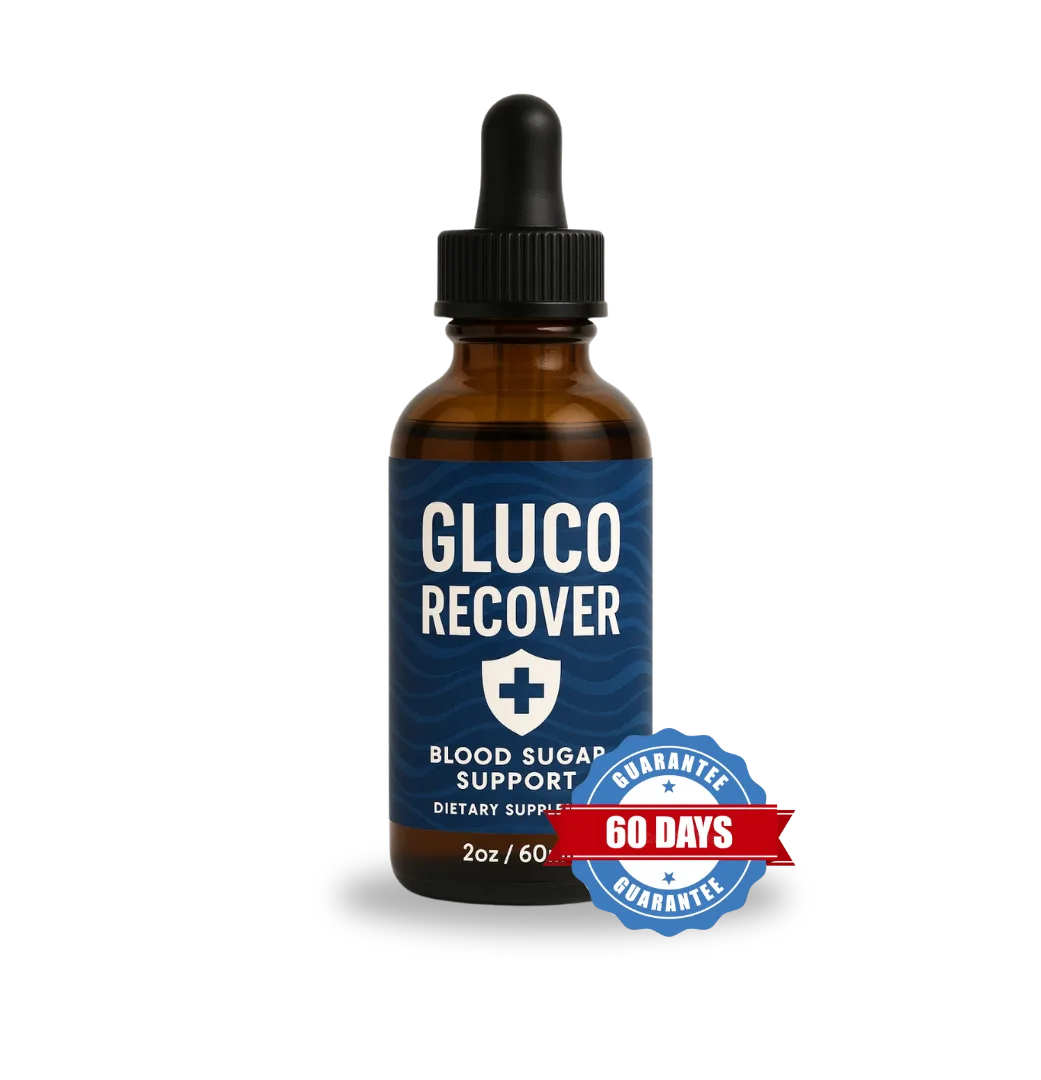
If the self-check showed a few risk factors and you want to act early with something simple, Gluco Recover is the option we recommend. It was made for exactly this everyday goal: supporting healthy blood sugar balance, steady energy and healthy weight management as part of a healthy lifestyle, in a format that takes seconds a day.
Here is why it is our top pick for people starting early:
- A plant-based botanical blendEpimedium and Eurycoma longifolia (Tongkat Ali) to support vitality and steady energy, wild yam and nettle root to support metabolic balance, plus saw palmetto and sarsaparilla for overall wellbeing.
- Fast-absorbing liquid dropsA 2 oz / 60 ml bottle; a simple daily dose under the tongue or in water, easy to pair with breakfast as your daily anchor.
- Made to a high standardProduced in a GMP-certified, FDA-registered US facility and non-habit-forming.
- Loved by customersRated 4.7/5 by verified customers.
- Zero-risk trialEvery bundle is backed by a 60-day money-back guarantee, plenty of time to build your new routine.
Because a steady routine works best over several months, the multi-bottle bundles offer the best value: 6 bottles at $49 per bottle ($294, free US shipping), 3 bottles at $72 per bottle ($216, free US shipping) or 2 bottles at $89 per bottle ($178 plus shipping). Prices were noted on the official website and can change; the live price is always shown at checkout.
Gluco Recover is a dietary supplement that complements healthy habits; it does not diagnose, treat, cure or prevent any disease, and it does not replace medication or medical care. If you take prescriptions, especially for blood sugar, talk to your doctor before starting.
Get Gluco Recover from the official site →
Official website · from $49 per bottle · 60-day money-back guarantee
Want the full breakdown first?
Read our complete Gluco Recover review: the formula ingredient by ingredient, what to expect week by week, current bundle prices and how the 60-day guarantee works. Or start from the Puriva Life home page and our guide to preventing blood sugar spikes after eating.
Read the Gluco Recover review →When to talk to a doctor
This self-check is a starting point, not a diagnosis. If you scored 3 or more, ask your doctor about an A1C or fasting glucose test. Seek care promptly for constant thirst, frequent urination, blurry vision, confusion, shakiness or unexplained weight loss. Discuss new habits and supplements with your doctor before starting, especially if you take medication.