How to check blood sugar at home: the right technique, the best times and 9 mistakes that skew your reading
Wash, prick the side, use a fresh strip, write it down
To check your blood sugar at home, wash your hands with warm soapy water and dry them, insert a fresh test strip, prick the side of a fingertip with the lancing device, touch the strip to the drop and read the result in mg/dL. The most useful times are first thing in the morning before eating (fasting) and about 2 hours after the start of a meal. Clean, dry hands, in-date strips and a log of every reading matter more than how often you test. Once you know your numbers, a simple daily routine, supported by Gluco Recover, is how you work on them.
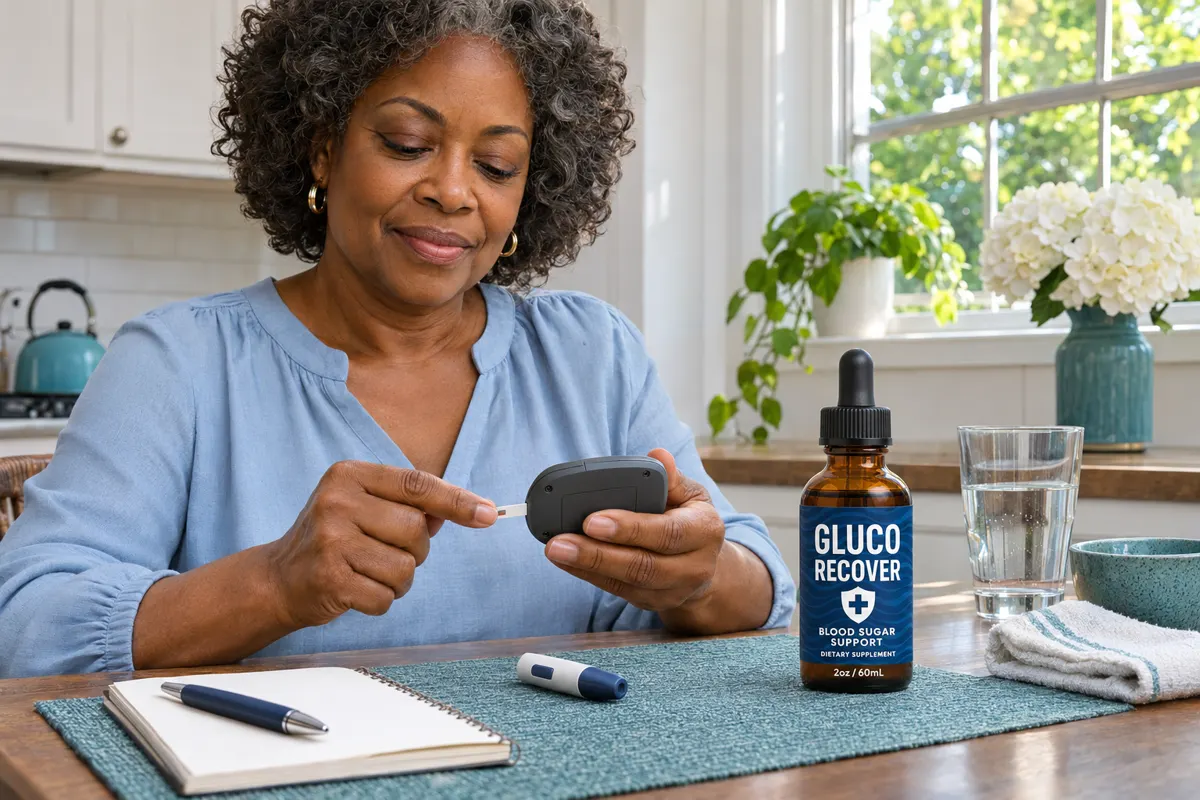
“How to check blood sugar” is one of the most searched blood sugar questions in the US, and the rising follow-ups are telling: “how long after I eat should I check?” and “how often should you check?” The meter itself is simple. What trips people up is everything around it: sugar on the fingertip, a squeezed finger, an old vial of strips, a reading taken at a random moment. This guide walks you through the right technique step by step, shows the best times to test and lists the common mistakes that quietly skew your number.
In this guide
What you need
- A blood glucose meterAny FDA-cleared home meter sold at US pharmacies works. Pick one with a screen you can read easily and a memory that stores your results.
- Test strips made for that meterStrips are not interchangeable between brands. Check the expiration date on the vial.
- A lancing device and new lancetsThe spring-loaded pen that makes the tiny prick. Most let you adjust the depth.
- Soap, warm water and a clean towelClean, dry hands matter more than anything else on this list.
- A logThe meter’s memory, an app or a simple paper template like our blood sugar log.
Step by step: the right finger-stick technique
- Wash your hands with warm, soapy water and dry them well. Food, juice or hand cream on your skin can add sugar to the drop. Warm water also brings blood to the fingertips. The CDC lists washing and drying your hands as the first step.
- Get the strip and lancing device ready. Take one strip out, close the vial right away, and insert the strip into the meter. Load a new lancet and set the depth (start low; go one step deeper if you get no drop).
- Choose the side of a fingertip. The sides have fewer nerve endings than the pad, so it hurts less. Rotate fingers so no spot gets sore.
- Prick, then let the drop form. Hold your hand below heart level for a few seconds. If the drop is small, gently massage from the base of the finger toward the tip instead of squeezing hard at the tip.
- Touch the edge of the strip to the drop. The strip wicks up the blood. Do not smear blood onto it or add a second drop unless your meter’s instructions allow it.
- Read and record the result. Write down the number, the time and what happened before (fasting, 2 hours after lunch, after a walk). The context is what makes the number useful.
- Dispose of the lancet safely. Use a lancet once and drop it into a sharps container or a hard plastic bottle with a lid.
Cannot wash your hands, for example on the road? Many diabetes educators suggest wiping away the first drop and using the second one, which is less likely to carry anything from your skin. If you use an alcohol wipe, let the skin dry completely before you prick.
When to check: the most useful times
A reading is only as useful as the moment it captures. These are the times most often recommended:
| When | What it tells you | Tip |
|---|---|---|
| Fasting (after waking, before eating or drinking anything but water) | Your baseline after the night | Same time each morning, before coffee |
| Before a meal | Your starting point for that meal | Useful to compare with the after-meal reading |
| About 2 hours after the start of a meal | How that meal affected you | Count from the first bite, not the last |
| Before and after exercise | How activity moves your numbers | Helpful if you take medication that can lower blood sugar |
| At bedtime | Where you go into the night | Pairs well with the next morning’s fasting check |
| When you feel “off” | Whether shaky, sweaty or very thirsty feelings are blood sugar related | See our low vs. high blood sugar chart |
So, how long after eating should you check? The American Diabetes Association uses 1 to 2 hours after the beginning of the meal for after-meal targets, and 2 hours is the most common choice for home checks. If a number after a meal surprises you, our guide on what to do in the first 2 hours after a spike has a calm, practical plan.
How often should you check?
There is no one-size answer, and more is not automatically better. The right schedule depends on your situation, and your doctor is the one to set it:
- No diabetes, curious or prediabetesA short “pattern week” often tells you more than daily checks forever: fasting each morning plus a 2-hour check after a different meal each day. Bring the results to your next visit.
- Type 2 diabetes, no insulinMany people check once a day or a few times a week at different times, as advised by their care team.
- On insulin or medication that can cause lowsUsually more often, on a schedule your doctor gives you. Follow it exactly.
Your A1C lab test complements home checks by showing the average of the past two to three months. Our guide on converting A1C to average blood sugar shows how the two numbers connect.
9 common mistakes that skew your reading
| Mistake | What it does | Fix |
|---|---|---|
| Testing with sugar on your fingers | Falsely high reading | Wash with soap and water, dry well |
| Wet hands or wet alcohol on the skin | Dilutes the drop | Dry completely before pricking |
| Squeezing the fingertip hard | Mixes tissue fluid into the blood | Hand below the heart, massage from the base |
| Expired strips or a vial left open | Strips react to air and humidity; results drift | Close the vial at once, check the date |
| Storing strips in the bathroom or a hot car | Heat and moisture damage strips | Room temperature, dry place, original vial |
| Using the wrong strip or meter code | Inaccurate readings | Only strips made for your meter; code it if required |
| Too small a drop | Error message or wrong result | Warm hands, slightly deeper setting, new strip |
| Testing on the forearm right after a meal | Alternate sites can lag when sugar is changing fast | Use the fingertip after meals, exercise or when you feel low |
| Not writing down the context | A number without a story is hard to use | Log time, meal and activity every time |
If a result does not match how you feel, wash your hands and test again. The FDA also recommends checking your meter with the control solution that comes with it, for example when you open a new vial of strips or if results seem off. Home meters are accurate enough for daily decisions, but they are not lab instruments: two readings a few minutes apart can differ by several points.
How to read your number
For adults without diabetes, the CDC lists a fasting blood sugar of 99 mg/dL or below as normal, 100 to 125 mg/dL as the prediabetes range and 126 mg/dL or above as the diabetes range. These ranges are confirmed with lab tests, not a single home reading. For people with diabetes, the American Diabetes Association’s general targets are 80 to 130 mg/dL before meals and below 180 mg/dL 1 to 2 hours after a meal, but your own goals may be different. Our normal blood sugar levels chart has the full picture.
One reading never tells the whole story. Look for patterns over a week or two, and bring your log to your appointment. Our list of questions to ask your doctor about your blood sugar helps you turn those numbers into a plan.
And this is where your measurements become motivating: every morning number and every 2-hour check shows you what your routine is doing. Many of our readers pair their checks with a simple daily support like Gluco Recover, taken at the same time every day, so the routine and the measuring become one habit.
When to talk to a doctor
Call your healthcare provider if your fasting readings are repeatedly 100 mg/dL or higher, if you see readings above 250 mg/dL, or if you have symptoms such as strong thirst, frequent urination, blurred vision or unexplained weight loss. Seek help right away for a reading below 70 mg/dL with symptoms that do not improve after treating it. Never change medication based on home readings without talking to your doctor.
Our recommendation: Gluco Recover
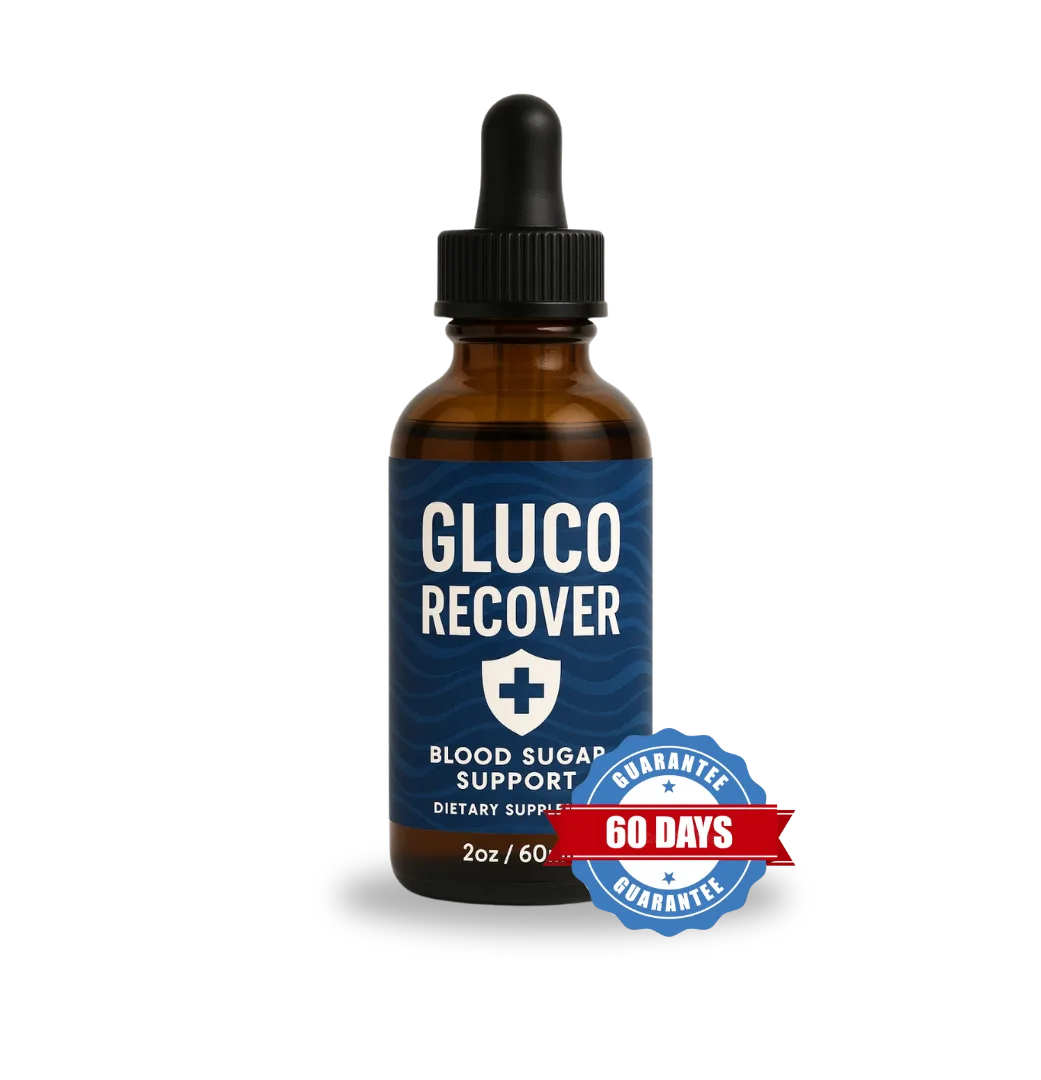
Measuring right tells you where you stand. The next step is a daily routine that moves your numbers in the right direction, and keeps going between checks. Gluco Recover is the option we recommend for exactly that. It was made to support healthy blood sugar balance, steady energy and healthy weight management as part of a healthy lifestyle, with a dose that takes seconds. Our full Gluco Recover review covers every detail, and the Puriva Life home page has a quick overview.
- A plant-based botanical blendEpimedium and Eurycoma longifolia (Tongkat Ali) to support vitality and steady energy, wild yam and nettle root to support metabolic balance, plus saw palmetto and sarsaparilla for overall wellbeing.
- Pairs with your morning checkA quick daily dose under the tongue or in water, easy to take right after your fasting reading, so measuring and supporting become one routine.
- Made to a high standardProduced in a GMP-certified, FDA-registered US facility and non-habit-forming.
- Zero-risk trialEvery bundle is backed by a 60-day money-back guarantee.
The multi-bottle bundles give your routine the weeks it needs to show up in your log: 6 bottles at $49 per bottle ($294), 3 bottles at $72 per bottle ($216) or 2 bottles at $89 per bottle ($178). Prices were noted on the official website and can change; the live price is always shown at checkout.
Gluco Recover is a dietary supplement that complements healthy habits. If you take prescriptions, especially for blood sugar, talk to your doctor before starting.
Get Gluco Recover from the official site →
Official website · from $49 per bottle · 60-day money-back guarantee
Want the full breakdown first?
Read our complete Gluco Recover review: the formula ingredient by ingredient, what to expect week by week, current bundle prices and how the 60-day guarantee works.
Read the Gluco Recover review →Sources
CDC, “Monitoring Your Blood Sugar” and “Diabetes Testing” (fasting ranges). American Diabetes Association, Standards of Care in Diabetes, glycemic targets. US FDA, “Blood Glucose Monitoring Devices” and tips for using home glucose meters (control solution, strip storage, alternate site testing). This article is general information, not medical advice.